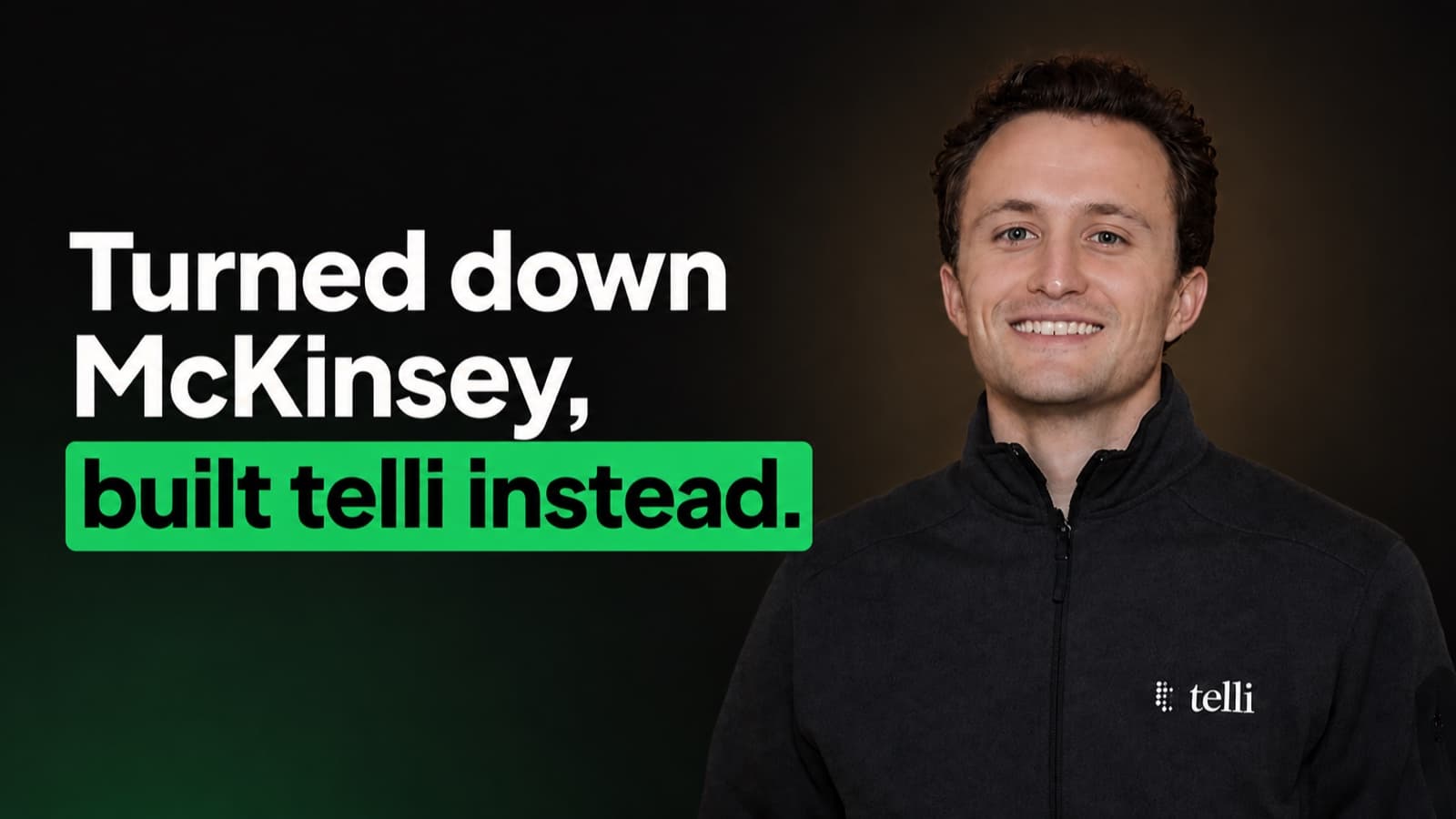
The McKinsey Contract He Never Started
Philipp Baumanns Co-Founder, telli
Philipp was born in Colombia and grew up in Hamburg. After his Abitur he went back with what he calls Duolingo Spanish, found a room in Medellín on Facebook Marketplace and worked for an organisation clearing landmines in a country ranked second in the world for them behind Afghanistan. He studied in St. Gallen, passed through private equity, VC and consulting, and had already signed a full-time contract when a childhood friend called and asked him to come to Berlin instead. At Enpal he joined a brand new heat pump unit early, watched it grow to 150 to 160 people within a year, and learned there what high agency actually looks like. Then came the part that rarely makes it into the story: no salary, no customers, three to five months of validation calls, a first idea that died in front of a spreadsheet, and a first YC application that was rejected. The second idea won three or four paying pilot customers in two weeks, and YC took them. This conversation covers the Airbnb in San Francisco with desks bought at Walmart, German customer calls at 4:30 in the morning, what their group partner said when they asked to stop growing for four weeks to fix the product, and why sitting at a table with Sam Altman and Brian Chesky convinced Philipp that Silicon Valley has not figured it out either. Today he is building telli with his two co-founders, a Voice AI platform that lets large B2C companies automate their inbound and outbound calls, with around 30 people and a 15 million seed round behind them.
Why this episode matters
Most founder stories treat the safe path as something you escape. Philipp had already signed the contract, and his reasoning for tearing it up is colder than that: every year of salary, benefits and security makes the jump a little more impossible. He left at the last moment it was still cheap.
Key moments
- 00:35
From the safe path to telli
Philipp's route from the classic business career to building a Voice AI company, and what telli actually does today.
- 04:28
Going back to Colombia
After school he returns with little more than Duolingo Spanish, finds a room in Medellín and later works with an organisation clearing landmines.
- 13:00
The contract he had already signed
McKinsey was the obvious next step. He had already signed full-time when he started asking which path would actually get him closer to founding.
- 19:23
Employee #2 in a new unit
He joins Enpal's heat pump business when the team is tiny. A year later the unit has grown to around 150 to 160 people.
- 24:34
The months nobody talks about
No salary, no customers, no certainty. Finding the idea that became telli took months of validation and failed directions.
- 26:37
Rejected once, traction the second time
Their first YC idea was too small for their ambition. After the rejection, the next idea gets three or four paying pilot customers within two weeks.
- 34:17
Desks from Walmart, calls at 4:30 AM
The YC setup in San Francisco: an Airbnb turned into an office, founder dinners, German customer calls before sunrise and seven-day work weeks.
- 38:30
“Then you have to do both”
They tell their YC partner they want to stop growing for four weeks and fix the product. His answer takes a few seconds.
- 50:40
What high agency actually looks like
Why Philipp sometimes prefers a less polished CV, why everyone at telli needs to work with AI and automation, and what he looks for when hiring.
- 58:27
The skill every AI company needs
Asked which role he would take at telli if he weren't a founder, he picks forward deployed engineer, and explains why every relevant AI company now has that motion.
Best quotes
“If you earn very good money, have great benefits, job security, a salary increase every year — then leaving becomes impossible.”
“Anyone who tells you it's seamless and fast is lying. You have no income, no certainty about where it's going, no customers.”
“We sat in front of a spreadsheet working out the potential, and said: this is far too small for what we want to build.”
“Do you want to be a company with a great product, or a company with a great product that grows? Then you have to do both.”
“The Americans haven't figured it out either. Silicon Valley hasn't figured it out. They don't have any skills that you don't have.”
Founder lessons
- 01The safe path gets more expensive the longer you stay on it. Salary, benefits and security compound into a reason not to leave.
- 02Finding the idea is the unglamorous part. Three to five months of validation calls with no income and no customers came before telli existed.
- 03Size the market before you commit. Their first YC idea died in a spreadsheet, which is also why the rejection wasn't a surprise.
- 04You rarely get to choose between fixing the product and growing it. The honest answer from their group partner was: do both.
- 05High agency isn't something consulting teaches you. It comes from small teams with limited resources where the standard route doesn't work, and it's the first thing Philipp hires for.
Work with Philipp
telli is hiring.
If the way Philipp builds sounds like your kind of place, start with the open roles.
Related episodes
All episodes →
Maximilian Arnold

Five Days from an Idea to a YC Application
Max spent his whole life collecting side quests. Five days before the YC deadline, he and his two co-founders started writing the application that turned one of them into the main quest.
Benedict Kurz

From Tennis Pro to Europe's biggest Learning App
Benedict was training six hours a day to turn pro. Then he launched an app from his grandfather's basement, and never got on the plane to Tunisia.